Google Launches AI Satellite With TPUs Into Orbit for Project Suncatcher
Four Google Tensor Processing Units are now in space aboard a Planet-built satellite, testing whether orbital data centers are feasible.
3 min read
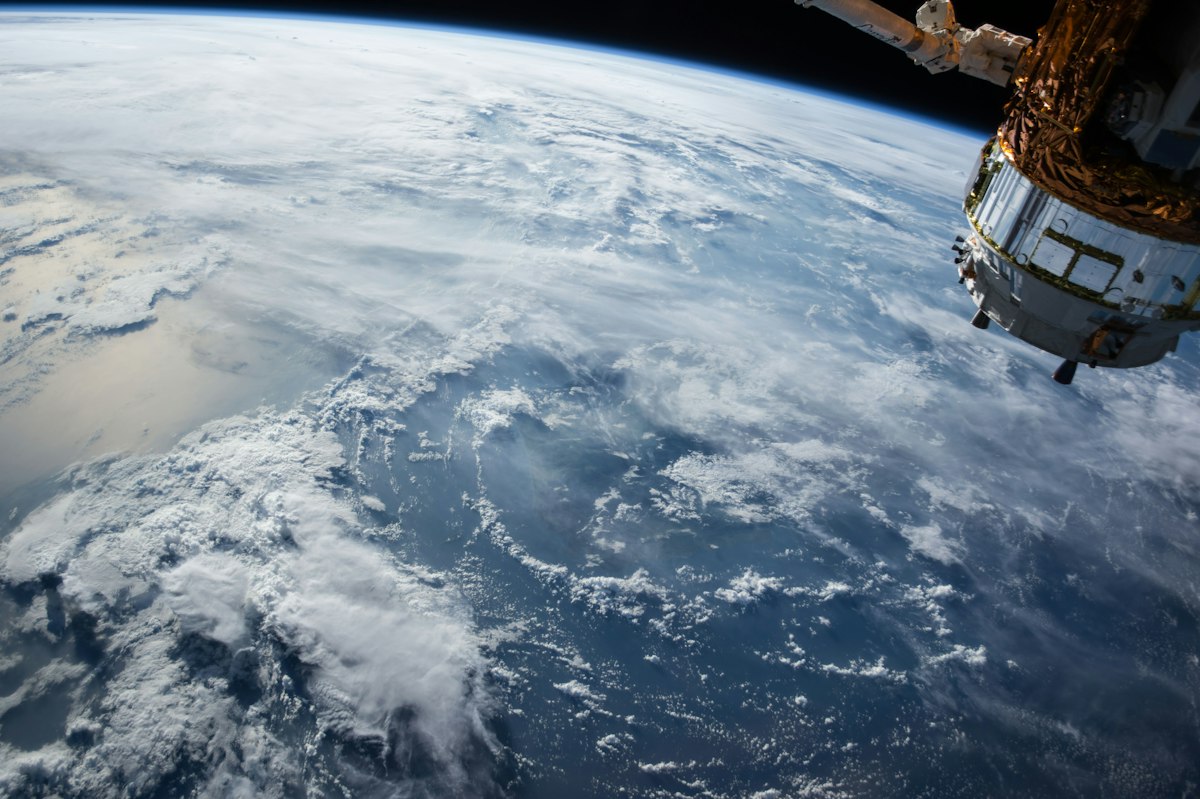
On October 1, 2026, a SpaceX Falcon 9 rocket carried something unusual into orbit: a satellite equipped with four of Google's Tensor Processing Units. The launch marks the first in-space hardware test for Project Suncatcher, Google's research program exploring whether AI data centers could eventually operate in space.
Google confirmed contact with the satellite and said it was operating as expected. The mission moves Suncatcher from simulation and ground testing into the harsh reality of orbital conditions.
Why put AI in space?
The premise is energy economics. Earth's data centers consume enormous power, much of it for cooling. Space offers constant solar exposure without atmospheric interference. If launch costs fall far enough, orbital compute could theoretically approach terrestrial energy costs per kilowatt-year.
Google's research paper estimates launch costs could drop below $200 per kilogram by the mid-2030s — contingent on sustained declines in launch prices. At that level, the team argues, space-based data centers could approach the energy costs of equivalent terrestrial facilities.
That is a projection, not a current business case. Google is explicit that Suncatcher remains a research moonshot.
What is being tested
The prototype satellite, built by Planet, carries four TPUs — the same chips that power Google's AI training and inference infrastructure. The test evaluates whether ML hardware can function reliably in orbit, including thermal management, radiation exposure, and communication with ground stations.
RuntimeWire noted that unresolved challenges include heat rejection, ground communications, and on-orbit reliability. Four TPUs surviving launch is one milestone. Sustained operation over months and years is another.
The bigger picture
Project Suncatcher emerged from Google's November 2025 research announcement. The October launch is the first hardware validation. If TPUs perform under real space conditions, Google can begin modeling larger constellations of orbital compute nodes.
The concept parallels other ambitious infrastructure bets — undersea cables, satellite internet constellations, quantum computing facilities. Each starts as research and only becomes industry-shaping if economics eventually align.
What this means for the AI industry
For most developers and businesses, orbital TPUs have no immediate impact. Inference and training will remain terrestrial for years. But the launch signals where frontier AI infrastructure thinking is heading: beyond Earth's power grids and cooling constraints.
Google is not alone in exploring unconventional compute. The AI scaling race has pushed companies to investigate every option — custom silicon, nuclear power partnerships, and now orbit.
Watching the test
The next evidence points are operational: Can four TPUs maintain performance under radiation? Can the satellite maintain thermal stability? Can ground communication sustain useful data transfer rates?
Google's October update moved one piece of Suncatcher from paper to orbit. Whether space-based AI data centers complement terrestrial ones — or remain a fascinating experiment — depends on results only the satellite can provide.





Comments
Loading comments…