OpenAI Confirms Humanoid Robot Plans and a 2027 Demo Timeline
Sam Altman says the hard part is the robot brain, not the body, as OpenAI hires across actuators, control systems, and supply chain ahead of a planned 2027 showcase.
8 min read
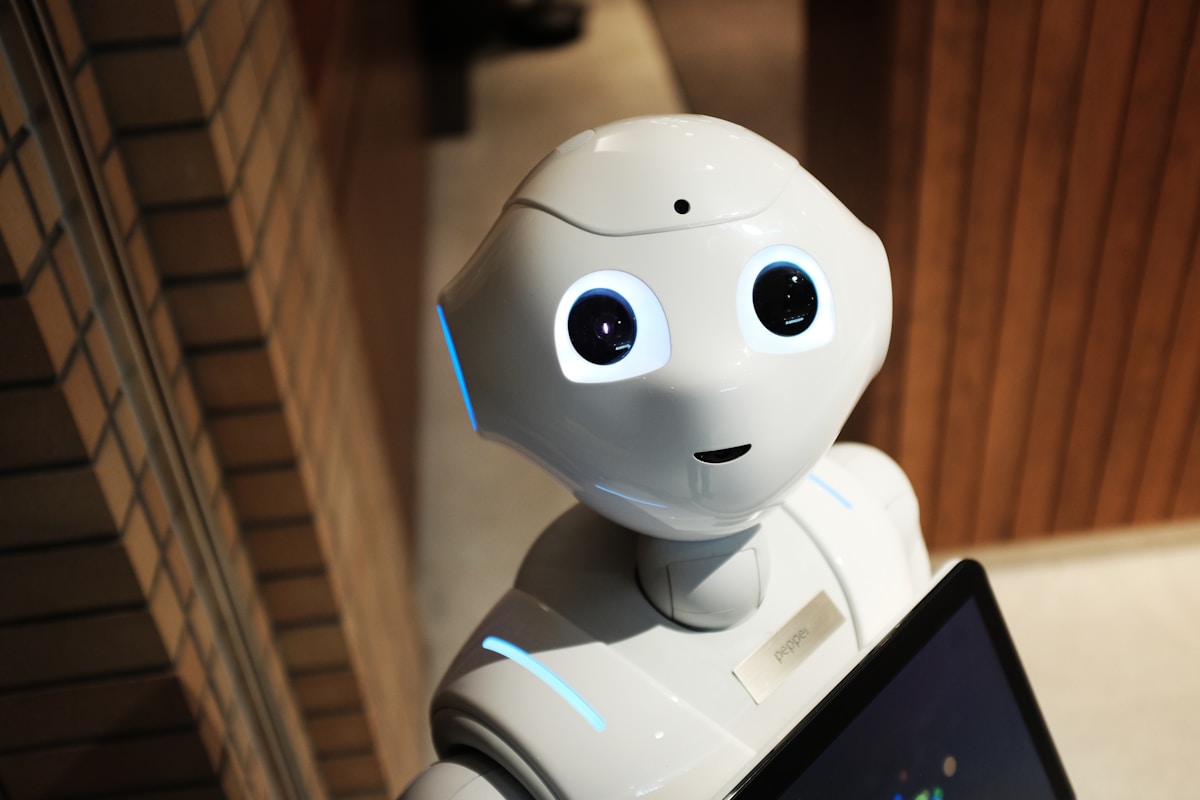
Sam Altman confirmed this week that OpenAI is building a humanoid robot, and the timeline he offered is specific enough to plan around even though the product details remain vague. On the Sources podcast and in follow-up comments to Fortune, Altman argued that the world is built for human-shaped bodies—doors, stairs, keyboards, and tools assume arms, legs, and a certain reach. A general-purpose machine that can move through offices, homes, and construction sites without bespoke fixtures probably needs to resemble the workers it is meant to assist. OpenAI’s answer to whether it will actually ship such hardware was blunt: “We will.”
What surprised many listeners was not the ambition but the sequencing. Altman said the hard part is not bolting actuators onto a frame. It is the “brain” that turns perception into safe, useful motion. He expects a “cool demo” in 2027 but cautioned that robots will not be walking down city sidewalks at scale until years after that. For a company already juggling frontier models, consumer devices, and enterprise agents, adding a full robotics stack is a bet that physical AI becomes the next distribution surface for its research—not a side project.
Why humanoids, and why now
Humanoid hype is not new. Boston Dynamics, Tesla’s Optimus program, Figure, Apptronik, and a long list of startups have spent a decade chasing bipedal balance and dexterous hands. The difference in 2026 is that large language models and vision-language models can now interpret messy natural-language goals and map them to multi-step plans. That does not solve grasping or walking, but it changes what “general purpose” means at the task layer. OpenAI’s robotics job board reflects the scope: control systems engineers for real-time motion, software engineers for data collection across morphologies, roles for custom electromechanical actuators, thermal management, and supply-chain scaling.
Altman’s framing—that matching human form factor “seems good”—is pragmatic engineering rhetoric, not science fiction. Warehouses can use wheeled arms; homes and legacy infrastructure often cannot. If OpenAI’s near-term objective, as one posting suggested, is helping skilled workers build infrastructure, a humanoid that can climb scaffolding or operate standard power tools is easier to justify than a consumer butler that folds laundry.
The brain problem is harder than it sounds
Calling the intelligence layer a “brain” understates the integration challenge. A capable humanoid must fuse camera feeds, force sensors, and proprioception; parse instructions with ambiguity (“grab the mug, not the plate”); plan grasps; execute with millisecond feedback; and recover when physics disagrees with the model. Picking up coffee is a chain of micro-decisions: segment the handle, estimate friction, modulate grip force, compensate for slosh. Failure modes are expensive in the real world—broken ceramics, injured coworkers, or a halted factory line.
OpenAI’s historical robotics work includes the Dactyl manipulation research, but consumer-scale humanoids demand reliability orders of magnitude higher than lab benchmarks. Reinforcement learning in simulation helps, yet sim-to-real gaps remain notorious. Altman’s emphasis on brain-over-body is partly investor messaging and partly admission: hardware partners exist; consistent behavior does not.
Hardware is not an afterthought
Despite the brain-first narrative, OpenAI is hiring heavily on the body side. Listings mention motors, transmissions, sensing suites, manufacturing partners, and in-person work in San Francisco four to five days a week—signals of a team that expects to touch metal, not only train models in the cloud. Custom actuators suggest OpenAI wants tighter coupling between learned policies and torque limits than off-the-shelf kits provide. That mirrors how Apple integrates silicon and software, but with far harsher safety stakes.
Competitors are not standing still. Tesla continues to iterate Optimus for its factories. Chinese firms such as XPENG have shown humanoids in staged demos. NVIDIA’s robotics stack lowers the bar for perception and simulation. OpenAI enters a crowded field with brand pull and model quality, but without a public prototype or partner OEM announcement—unusual for a company that usually pre-announces carefully.
Timeline, demos, and what “2027” might mean
A 2027 demo could mean a teleoperated showcase, a constrained environment walk, or a manipulation task in a studio—not mass production. Altman explicitly separated demo from deployment. That gives OpenAI room to show progress to employees and investors while avoiding the overpromise cycles that hurt earlier robotics firms. It also aligns with OpenAI’s pattern on GPT releases: capability proofs precede API stability and pricing.
Regulatory and liability questions lag hardware. A home robot with cameras and microphones reopens debates OpenAI already faces on ChatGPT data use. Industrial deployments raise OSHA-adjacent concerns. Insurance markets have been wary of autonomous agents in software; physical agents multiply that uncertainty. None of that blocks a demo, but it shapes who buys first—likely enterprises with safety protocols, not consumers.
Competitive landscape and strategic fit
OpenAI’s robotics push completes a vertical story: models in the cloud, agents on laptops, devices in pockets, and eventually machines in the world. Google DeepMind, Meta, and Anthropic have mostly stayed out of branded humanoids, focusing compute on data centers and APIs. OpenAI’s willingness to own hardware risk differentiates it—and concentrates capital requirements. Robotics is capex-heavy; model training already is. Investors will watch whether robotics hiring dilutes focus from core model races against Anthropic and Google.
For developers, the near-term impact may be APIs and simulation tools rather than purchasable robots. OpenAI could license perception stacks or offer teleoperation data services before selling units. Job postings emphasizing data collection labs hint that scaling demonstration data is an immediate bottleneck.
What to watch through 2027
Three milestones will clarify whether this is a serious product line or a research halo. First, whether OpenAI announces hardware partners or keeps actuators in-house. Second, whether training infrastructure posts shift from “collection” to “deployment,” signaling production intent. Third, how safety disclosures evolve—OpenAI’s misalignment incident log for software agents has grown to 19 entries; physical systems will need analogous transparency.
Until then, treat Altman’s comments as confirmation of direction, not a preorder date. The humanoid race in 2026 is as much about who can integrate learning-based control with dependable mechanics as about who has the flashiest keynote. OpenAI bet the next decade of computing on generative models; it now appears to be betting that those models need legs to finish the job.
Enterprise buyers should plan in quarters, not keynotes
Facilities teams evaluating automation should separate vendor roadmaps from installable systems. A 2027 demo does not imply OSHA-ready deployments in factories or hospitals. Procurement cycles for industrial robots still run twelve to thirty-six months when safety certification, union consultation, and insurance riders are included. OpenAI’s likely first buyers—if hardware ships—are deep-pocketed partners willing to co-develop data and tolerate downtime, not small businesses ordering from a product page.
IT leaders should also watch API spillovers. Robotics teams at OpenAI will consume the same vision and reasoning stacks that power ChatGPT agents. Improvements in tool use, memory, and multimodal understanding will surface in cloud APIs before they appear in a biped. That means your software agent strategy and your future physical automation strategy may converge on one vendor relationship, with corresponding concentration risk.
Privacy, data, and the living-room question
Consumer humanoids reintroduce surveillance debates in a mobile form factor. A robot that navigates a home must map rooms, recognize occupants, and possibly stream video for cloud inference. OpenAI has not published a robot-specific privacy model. Existing ChatGPT policies on training data and enterprise retention will not map cleanly onto always-on household devices. Regulators in the EU and California will ask whether biometric data from in-home robots triggers special categories under GDPR and CPRA.
Parents and educators will ask different questions: whether classroom assistants need COPPA-compliant modes, whether children’s speech is used for training, and how to delete household maps. Companies that answer these proactively—on-device processing, local logs, explicit mapping deletion—will fare better than those that retrofit policies after launch.
Supply chain and geopolitics
Actuators, rare-earth magnets, and precision gearboxes concentrate manufacturing in Asia. OpenAI’s hiring for supply-chain roles suggests awareness that model excellence does not immunize against component shortages. Tariffs, export controls on advanced chips used in edge inference, and shipping volatility can delay hardware more than software slips. Enterprises comparing OpenAI to Tesla or Chinese humanoid vendors should score supply resilience alongside model benchmarks.
A sober checklist for 2026
If you are documenting vendor risk this quarter, capture four items: published safety incidents for software agents (OpenAI’s log now lists nineteen), robotics headcount growth versus model releases, demo versus production statements from executives, and partner ecosystems for mechanics and service. None guarantee success; together they reduce surprise when humanoid hype cycles peak before units ship.
The bottom line for technology leaders is patience with a clear direction. OpenAI is building a humanoid because it believes general intelligence must act in the world, not only on screens. The body is engineering; the brain is research; the business is still unwritten.

Comments
Loading comments…